Moving flame vs flickering flameless candles deserve a decision based on the actual product, the way the space operates, and the maintenance someone will perform. This guide uses Zabicat’s current listing details as the factual product context, then separates those facts from practical editorial advice about fit, placement, control, and care.
The aim is not to make an electronic candle sound like a burning candle. For moving flame vs flickering flameless candles, shoppers should judge a stable body, a flame-shaped LED component, the correct power routine, and a scene where the product can be used honestly. Measurements and product instructions should always take priority over a staged photograph.
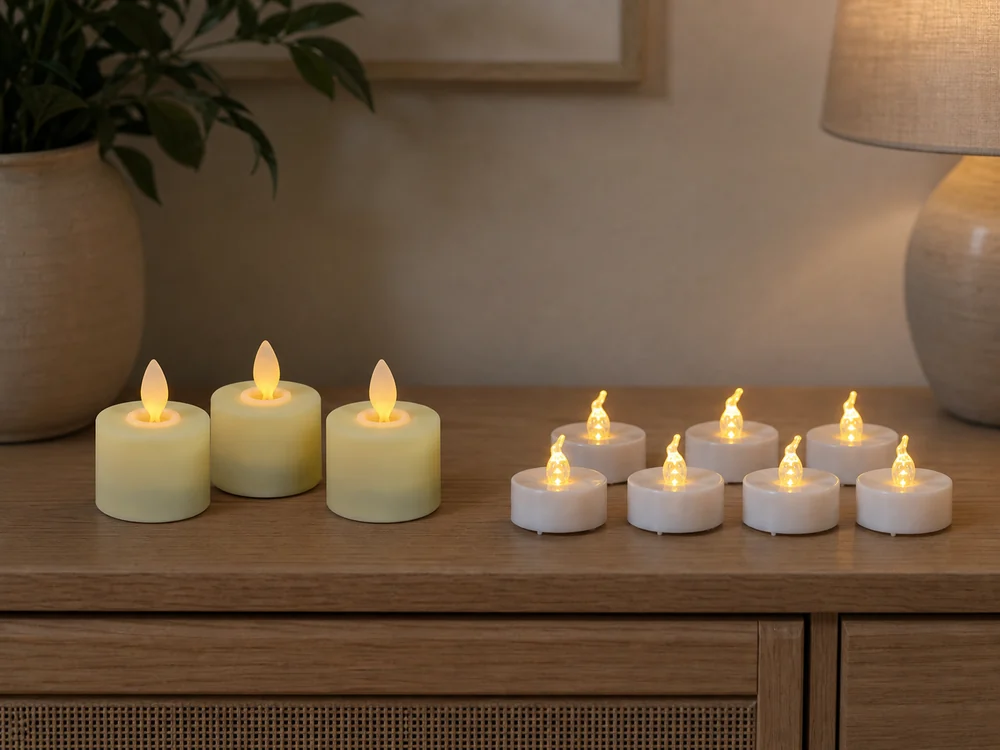
Product context: Review the primary Zabicat product, compare this related electronic candle option, and read the relevant Zabicat guide. The comparison uses Zabicat’s short cream moving-flame pillars and its low white battery tea lights with translucent yellow flame-shaped tips and a six-hour timer stated in the listing title.
Moving Flame vs Flickering Flameless Candles Starts With Mechanism
Moving flame vs flickering flameless candles is a comparison of two different visual systems. A moving-flame pillar uses a lighted flame-shaped component that changes physical position or apparent position. A standard flickering tea light normally keeps its tip fixed while the LED intensity varies. Both are electronic effects, and neither contains a burning wick.
Mechanism affects what the viewer notices. Physical movement can create changing highlights across a recessed pillar top, while brightness variation is most visible as a pulse inside a holder. The better option depends on scale, distance, and placement. It cannot be decided from the word realistic alone because each room reveals different details.
Compare the Tip at Normal Viewing Distance
At close range, a moving tip may provide more dimensional change than a fixed LED. Across a room, however, small physical movement can disappear while the changing light remains visible. Stand where guests actually sit or walk, then watch the candle for at least a minute rather than judging one bright moment in a product photograph.
Use the same ambient lighting for the test. Daylight, ceiling lamps, and dark evening conditions can make one effect appear much stronger than another. If the candle will sit behind frosted glass, test it inside that exact holder. Diffusion may soften a fixed flicker effectively while hiding the detailed movement that justified a larger pillar.
Match Candle Scale to the Display
Moving-flame mechanisms are often most useful in pillars or tapers where the top remains visible. The Zabicat reference pillars have cream cylindrical bodies and recessed tops that frame leaf-shaped electronic tips. Their visual mass suits a mantel, console, lantern, or centerpiece where each candle is intended to be noticed as an object.
Small flickering tea lights solve a different problem. Their low white bodies can fit votive holders, pumpkins, table accents, and repeated arrangements where the glow matters more than the individual candle body. A pack of many tea lights may create better rhythm across a long surface than a few larger moving pillars, even if each point has less physical motion.
Check Holder Clearance and Visibility
A moving electronic tip needs clearance. Do not press decorative material against it or place it under a lid that conflicts with the product instructions. Measure the holder opening and depth, then make sure the recessed top can be cleaned and the candle can be lifted out without pulling on the tip.
For fixed-tip tea lights, holder depth controls how much of the plastic body remains visible. A lightly frosted cup can diffuse the yellow light, while an opaque deep container may block nearly all of it. Test for access as well as appearance; staff or family members should be able to switch, clean, and retrieve the unit without tipping the holder.
Evaluate Sound and Repetition
A moving mechanism may produce a faint sound in a very quiet room. That may be irrelevant in a dining area and noticeable beside a bed, reading chair, or ceremonial space. Listen from the normal position with the room otherwise quiet. Product samples and surroundings vary, so do not assume silence or objectionable noise without a direct test.
Repetition also changes the result. One moving pillar can feel subtle, while many unsynchronized tips may create a busy field. Fixed flickering tea lights can also look chaotic if their brightness patterns are harsh. Arrange the intended quantity before committing, and reduce the count if motion competes with conversation, artwork, or the focal object.
Compare Power and Control Routines
Visual effect is only one part of ownership. Compare the required battery type, access to the compartment, included remote, timer pattern, and expected frequency of use. A six-hour timer can suit a repeated evening display, while individually switched units may be acceptable for a one-night event. Verify current listing details before ordering.
The most useful control is the one people will operate consistently. A remote does not help if it is misplaced, and a timer does not help if the start time is never checked after changing batteries. Write a short setup routine, label stored accessories, and keep spare cells secure. Operational fit often decides long-term satisfaction more than animation style.
Use Fire-Safety Context Without Overclaiming
Both styles remove the burning wick, exposed flame, soot, and dripping hot wax found with conventional candles. The NFPA candle safety guidance explains why open-flame placement deserves care. Electronic products change that risk profile, but damaged batteries, unsuitable charging, moisture, and unstable placement still require sensible handling.
Avoid calling either effect universally safe or identical to fire. The accurate description is an LED light effect with a fixed or moving flame-shaped component. That language helps shoppers choose for the right reason and keeps styling advice grounded in observable product construction rather than emotional claims about a perfectly open flame.
Choose by Scene, Not by Feature Count
Select moving pillars when the candle body and animated top are part of the display. Select fixed flickering tea lights when compact size, quantity, holder compatibility, and distributed glow matter more. Some rooms benefit from both, but separate them into zones so the difference reads as intentional rather than inconsistent.
A useful final test photographs each option from the same position with identical exposure. Review the tip shape, body visibility, reflections, and shadows, then complete the battery or timer routine. This evidence-based comparison makes moving flame vs flickering flameless candles a practical design decision instead of a contest between marketing labels.
Decision Notes for Moving Flame Vs Flickering Flameless Candles
Measure the display: Record the normal viewing distance, holder depth, available height, and whether guests will see the electronic tip directly or mainly see reflected light. Write the dimensions beside the product listing before ordering. This small step prevents a decorative image from overriding holder fit, access, and the true amount of space available.
Identify the likely failure: The usual comparison failure is selecting the most animated effect without checking whether the tip is visible, the holder blocks movement, or the room needs many small lights instead. Planning around the weak point creates a more reliable result than adding features that do not solve the daily problem.
Define the routine: Test one complete operating cycle in the intended room, listen for mechanical sound at quiet moments, and compare brightness and motion from seated and standing positions. A repeatable routine is evidence that the product suits the setting. If the process sounds inconvenient before purchase, another power type, pack size, or candle shape may be the better choice.
A Practical Evaluation Worksheet
Create a one-page worksheet before buying moving flame vs flickering flameless candles. In the first column, record only facts visible on the current product page: dimensions, quantity, power source, included controls, timer choices, charging or cell requirements, body material, and light-tip design. In the second column, record facts about the destination: available width and height, holder dimensions, outlet access, moisture exposure, viewing distance, operating frequency, and the person responsible for maintenance. A product belongs on the shortlist only when both columns agree.
Then run a small scene test for moving flame vs flickering flameless candles instead of decorating the whole room at once. Use one holder or tray, photograph the candle while switched off and on, view it from the normal seated or standing position, and practice the full service step. That step may mean lifting the unit for charging, opening a battery door, cleaning a recessed top, or collecting several pieces after use. The test reveals practical friction that specifications alone cannot show, while keeping the recommendation grounded in observable evidence rather than assumptions.
Care, Storage, and Product Review
Keep moving components free of dust and pressure, clean fixed tea-light tips with a dry cloth, and store both styles so their translucent electronic tips cannot be crushed. Protect the light tips from pressure, keep accessories with the set, and stop using any piece with visible damage. Clean condition matters because dust and residue alter both close-up appearance and light spread.
For moving flame vs flickering flameless candles, review the product page again when reordering because pack contents, controls, and specifications can change. This article was checked against current Zabicat listing details on July 14, 2026. The styling recommendations are editorial guidance, not a laboratory performance test or a substitute for the manufacturer’s instructions.
FAQ
Do moving-flame candles always look more realistic?
No. Viewing distance, holder design, ambient light, tip construction, and the quality of the motion all affect the result.
Are flickering tea lights better inside holders?
They can work well because the holder diffuses brightness changes, but dimensions and access still need to be tested.
Can moving and flickering candles be used together?
Yes. Place them in distinct zones and match color temperature so the combination looks deliberate.
Bottom line: Choose moving flame vs flickering flameless candles only after the size, power routine, electronic flame shape, control method, and maintenance plan all fit the real setting. A clear product match creates better decor and fewer surprises than a purchase based only on a distant glow photo.