Flameless candles for church altars deserve a decision based on the actual product, the way the space operates, and the maintenance someone will perform. This guide uses Zabicat’s current listing details as the factual product context, then separates those facts from practical editorial advice about fit, placement, control, and care.
The aim is not to make an electronic candle sound like a burning candle. For flameless candles for church altars, shoppers should judge a stable body, a flame-shaped LED component, the correct power routine, and a scene where the product can be used honestly. Measurements and product instructions should always take priority over a staged photograph.
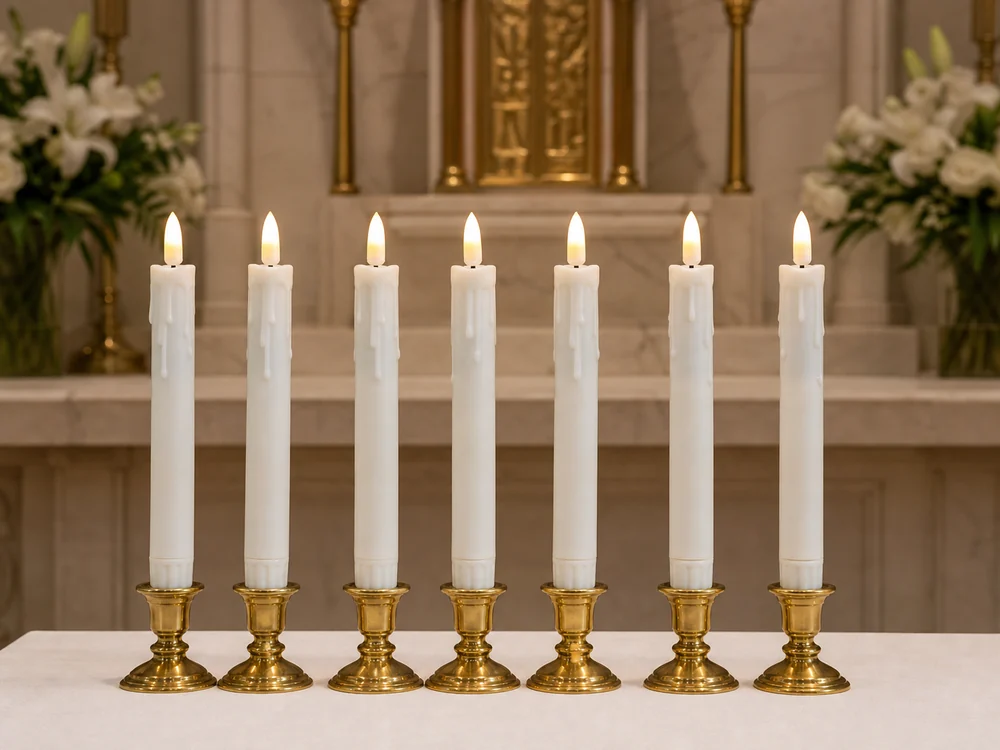
Product context: Review the primary Zabicat product, compare this related electronic candle option, and read the relevant Zabicat guide. The primary Zabicat listing shows white seven-inch battery-operated tapers with molded drip details, small electronic flame-shaped tips, and handheld remote controls.
Flameless Candles for Church Altars Begin With Permission
Flameless candles for church altars should be considered within the worship tradition and the building’s operating rules. Ask clergy or worship leaders whether electronic candles are appropriate for the specific service and location. Then confirm facility, fire-code, insurer, and accessibility requirements. A product that works for a fellowship hall may not suit a principal altar.
Document the approved purpose before choosing a candle. The need may be daily devotional light, seasonal decoration, a children’s service, a historic building restriction, or temporary continuity when open flame is not permitted. Clear purpose prevents a practical LED substitute from being presented as a theological or ceremonial decision that has not been authorized.
Match Taper Dimensions to Existing Holders
The referenced Zabicat tapers are white, seven inches tall, and battery operated. Their rigid bases must fit the actual candle cups without forcing, leaning, or improvised packing. Measure the cup opening and depth, then test one candle in every holder type because old sanctuary furnishings can vary even when they appear to be a matching set.
Include the holder height in the calculation. A seven-inch taper on a tall brass stand may place the electronic tip above the intended visual line or within reach of fabric banners. The complete assembly should remain stable during normal movement, cleaning, kneeling, processions, and nearby microphone or music-stand adjustments.
Respect Sight Lines and Visual Hierarchy
An altar arrangement should support attention rather than compete with it. View the candles from the front pew, side aisles, choir position, camera position, and clergy seating. Bright electronic tips can appear stronger on video than they do to the eye, especially in a dim sanctuary. Test the real service lighting before setting quantity.
Use symmetry only when it matches the existing visual language. Two or four tapers may frame a central object clearly, while a dense row can obscure flowers, vessels, text, or gestures. Keep the electronic construction neat and visible on close inspection rather than adding imitation wax, loose material, or decorations around the LED components.
Plan Remote and Timer Control
A remote can let one assigned person activate several tapers without reaching across the altar. Test range from the exact control position and make sure other devices do not create confusion. Keep a manual switching procedure available because batteries in a remote can fail and different candle sets may not respond identically.
Timers require explicit approval and a written start time. An automatic evening cycle may suit a display area but conflict with service changes, cleaning hours, or building closure. Observe a full cycle before relying on it. The responsible person should know how to cancel the timer and how to confirm that every unit is off.
Create a Before-Service Check
Test every taper away from the altar before placement. Confirm the body is clean, the tip is straight, the output matches the group, and the battery door is secure. Replace or isolate any piece with damage, corrosion, irregular heat, or unreliable switching. Do not place a weak candle merely to preserve visual symmetry.
After testing, carry candles in a divided tray that protects the tips. Install them in a consistent order and complete one final view from the congregation area. The check should be calm and repeatable, not added during the last minutes before worship. A written sequence also helps volunteers perform the same standard across different services.
Store Tapers as Equipment
Slim LED tapers are vulnerable at the flame-shaped tip and molded drip detail. Use individual slots or soft dividers, keep heavy altar hardware in a separate container, and label the remote for the exact set. Storage should be dry, stable, and accessible only to the people responsible for setup and maintenance.
For long gaps between seasons, follow the product instructions for battery removal and storage. Inspect contacts before reuse and record the date that cells were installed. A small inventory sheet can track candle number, holder position, battery service, and faults. This is especially useful when several chapels or ministries share similar-looking equipment.
Explain the Open-Flame Difference Accurately
The NFPA candle safety guidance describes the placement and supervision concerns associated with burning candles. LED tapers eliminate a burning wick, soot, dripping hot wax, and direct flame. That distinction can matter in older buildings, crowded services, children’s programs, and locations near textiles.
Electronic does not mean maintenance-free. Batteries, charging accessories, damaged housings, loose holders, and moisture remain practical concerns. Describe the product as an electronic candle with a flame-shaped LED component, not as sacred fire or a perfect imitation. Accurate language respects both the object and the setting in which it is used.
Review the Choice After Real Services
After the first use, ask the people who set up, lead, clean, record, and attend the service what they observed. Check whether the candles distracted on camera, created glare, leaned in holders, responded reliably, or required awkward access. Record adjustments while the experience is current rather than relying on memory before the next season.
A successful arrangement may use fewer candles, shorter holders, a different control position, or a separate LED option for non-altar areas. Choosing flameless candles for church altars is therefore an ongoing fit decision. Product specifications, authorized practice, and observed service conditions should remain more important than a staged image or one-time convenience.
Decision Notes for Flameless Candles For Church Altars
Measure the display: Measure each holder cup, taper base, assembled height, spacing from cloth and flowers, and the sight line from the congregation before approving a layout. Write the dimensions beside the product listing before ordering. This small step prevents a decorative image from overriding holder fit, access, and the true amount of space available.
Identify the likely failure: The central failure is treating a commercial candle choice as only a decor decision without first confirming clergy, facility, liturgical, accessibility, and insurance requirements. Planning around the weak point creates a more reliable result than adding features that do not solve the daily problem.
Define the routine: Assign one person to test the set before a service, place each taper in a numbered holder, verify the remote response, and count every piece back into protected storage. A repeatable routine is evidence that the product suits the setting. If the process sounds inconvenient before purchase, another power type, pack size, or candle shape may be the better choice.
A Practical Evaluation Worksheet
Create a one-page worksheet before buying flameless candles for church altars. In the first column, record only facts visible on the current product page: dimensions, quantity, power source, included controls, timer choices, charging or cell requirements, body material, and light-tip design. In the second column, record facts about the destination: available width and height, holder dimensions, outlet access, moisture exposure, viewing distance, operating frequency, and the person responsible for maintenance. A product belongs on the shortlist only when both columns agree.
Then run a small scene test for flameless candles for church altars instead of decorating the whole room at once. Use one holder or tray, photograph the candle while switched off and on, view it from the normal seated or standing position, and practice the full service step. That step may mean lifting the unit for charging, opening a battery door, cleaning a recessed top, or collecting several pieces after use. The test reveals practical friction that specifications alone cannot show, while keeping the recommendation grounded in observable evidence rather than assumptions.
Care, Storage, and Product Review
Use a dry cloth on the white bodies, protect molded drip details and LED tips from pressure, and keep batteries, remotes, and chargers together in labeled storage. Protect the light tips from pressure, keep accessories with the set, and stop using any piece with visible damage. Clean condition matters because dust and residue alter both close-up appearance and light spread.
For flameless candles for church altars, review the product page again when reordering because pack contents, controls, and specifications can change. This article was checked against current Zabicat listing details on July 14, 2026. The styling recommendations are editorial guidance, not a laboratory performance test or a substitute for the manufacturer’s instructions.
FAQ
Can every church use flameless candles on the altar?
No. Approval depends on the denomination, clergy, local practice, facility rules, insurer requirements, and the purpose of the service.
What should be measured before buying LED altar tapers?
Measure the taper base, holder cup, assembled height, spacing, fabric clearance, and sight lines from seating and cameras.
Who should control remote-operated altar candles?
Assign a trained person and keep a manual switching procedure available in case the remote does not respond.
Bottom line: Choose flameless candles for church altars only after the size, power routine, electronic flame shape, control method, and maintenance plan all fit the real setting. A clear product match creates better decor and fewer surprises than a purchase based only on a distant glow photo.