Battery operated candles for theater props deserve a decision based on the actual product, the way the space operates, and the maintenance someone will perform. This guide uses Zabicat’s current listing details as the factual product context, then separates those facts from practical editorial advice about fit, placement, control, and care.
The aim is not to make an electronic candle sound like a burning candle. For battery operated candles for theater props, shoppers should judge a stable body, a flame-shaped LED component, the correct power routine, and a scene where the product can be used honestly. Measurements and product instructions should always take priority over a staged photograph.
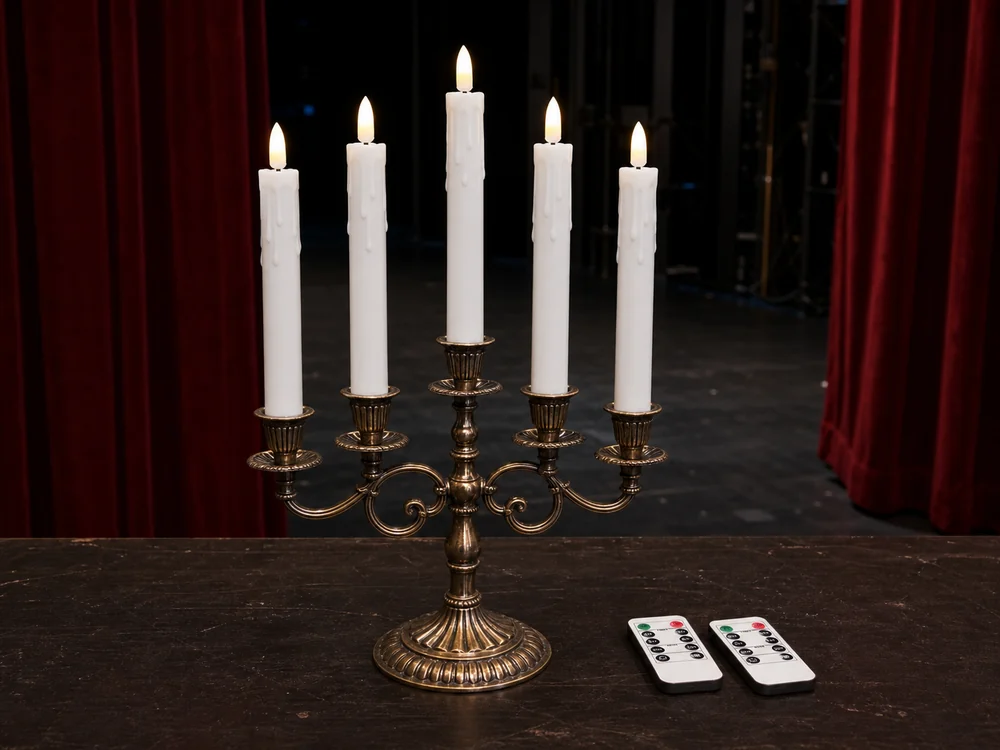
Product context: Review the primary Zabicat product, compare this related electronic candle option, and read the relevant Zabicat guide. The primary listing specifies six white plastic seven-inch tapers with warm white flashing light, two AAA batteries required per candle but not included, remote control, and a 2.0 cm bottom diameter.
Battery Operated Candles for Theater Props Start With the Cue
Battery operated candles for theater props must serve a specific production need. The script may call for an actor to carry a taper, discover a light, place a candelabrum, or create a visible glow at a distance. Define the cue with the director, designer, stage manager, props lead, and venue before selecting a consumer candle set.
Confirm whether the prop is handheld, stationary, seen in blackout, viewed close by the audience, or recorded on camera. A candle that works as table decor may not respond quickly enough for a cue or survive repeated handling. The production should approve the electronic appearance and control method before the prop is integrated into blocking.
Match the Taper to the Prop Holder
The referenced Zabicat tapers are seven-inch white plastic bodies with molded drip detail, small dark stems, and opaque flame-shaped LED tips. The listing gives a 2.0 cm base diameter. Measure each candelabrum, wall sconce, lantern, or handheld holder and test the rigid base without forcing it into a cup intended for soft wax.
A stage prop must remain stable through movement, vibration, scene shifts, and repeated presets. Use only appropriate holder inserts and production-approved securing methods that do not damage the candle or hide battery access. Do not pack the gap with paper or fabric. Test the completed assembly through the exact route the actor or crew member will use.
Evaluate the Effect Under Show Lighting
Warm white flashing light can read differently under bright front light, saturated color, haze, projections, and camera exposure. Test the prop onstage from several seats while running the actual cue. Record whether the electronic tip remains visible when off, whether the glow is strong enough when on, and whether reflections reveal an unwanted plastic surface.
Do not modify the candle with paint, solvent, heat, or cutting unless the production has verified material compatibility and accepted responsibility for the alteration. A simple holder, shade, or blocking adjustment may solve visibility more reliably. Preserve access to switches and batteries, and keep scenic material away from moving or lighted components.
Rehearse Manual and Remote Operation
The listing includes remote control, but a show cue needs more than one successful test. Check range, angle, response time, and whether one command affects unintended candles. Rehearse with the prop in its final position and with scenery, costumes, and performers present. Wireless convenience should not replace a clear manual backup.
Decide who owns the cue: actor, props crew, deck electrician, or stage management. Put the procedure in the run sheet and label remotes by set. If an actor operates a bottom switch, choreograph the action so it is repeatable and does not put pressure on the LED tip or loosen the candle inside its holder.
Control AAA and Remote Batteries
The primary listing says each taper requires two AAA batteries and that those candle batteries are not included. Build the battery quantity into the production budget and create matched sets. Do not mix old and new cells or different types within one candle. Follow the product instructions and venue procedures for installation, storage, testing, and disposal.
Measure performance during rehearsal without presenting one runtime as a universal guarantee. Label installation dates, keep tested spares at the props table, and isolate cells that leak, swell, corrode, or become unusually warm. Remote coin cells also need secure storage. Battery handling should be assigned, documented, and completed away from rushed entrances.
Use Stage and Fire-Safety Context
The official City Theatrical candle information notes that live flames are tightly regulated in entertainment and describes battery-operated stage candle systems. The NFPA candle safety guidance provides broader open-flame context. The venue’s fire officer, production policies, and risk assessment remain controlling.
Consumer LED tapers can suit some static or low-complexity props, but they are not DMX fixtures and should not be represented as professional show-control equipment. Describe their actual remote and switch features. A production needing synchronized dimming, guaranteed cue response, custom wiring, or certified effects should evaluate purpose-built theatrical systems.
Preset, Inspect, and Store the Prop
Create a marked preset position that supports the complete prop and protects every tip. Before each performance, inspect holder fit, body condition, battery doors, output, remotes, and cue response. After the scene, return the candelabrum to a stable rack rather than laying decorated candles under other props or costumes.
At post-show check, record faults and remove questionable units before the next call. Store batteries and remotes according to production policy, keep the candle set divided from metal hardware, and preserve the approved setup photograph. This routine turns battery operated candles for theater props into repeatable stage equipment while keeping their consumer-product limitations visible.
Decision Notes for Battery Operated Candles For Theater Props
Measure the display: Measure the prop holder cup, taper base, full candelabrum height, actor grip area, wing-storage clearance, preset table, and visibility from the nearest and farthest audience seats. Write the dimensions beside the product listing before ordering. This small step prevents a decorative image from overriding holder fit, access, and the true amount of space available.
Identify the likely failure: The key failure is selecting a candle that looks acceptable at a prop table but becomes too dim, visibly plastic, unstable, noisy, or difficult to cue under real stage lighting and blocking. Planning around the weak point creates a more reliable result than adding features that do not solve the daily problem.
Define the routine: Obtain production approval, label every candle and battery set, test the prop under show lighting, rehearse manual and remote cues, preset it consistently, and complete a post-show battery and damage check. A repeatable routine is evidence that the product suits the setting. If the process sounds inconvenient before purchase, another power type, pack size, or candle shape may be the better choice.
A Practical Evaluation Worksheet
Create a one-page worksheet before buying battery operated candles for theater props. In the first column, record only facts visible on the current product page: dimensions, quantity, power source, included controls, timer choices, charging or cell requirements, body material, and light-tip design. In the second column, record facts about the destination: available width and height, holder dimensions, outlet access, moisture exposure, viewing distance, operating frequency, and the person responsible for maintenance. A product belongs on the shortlist only when both columns agree.
Then run a small scene test for battery operated candles for theater props instead of decorating the whole room at once. Use one holder or tray, photograph the candle while switched off and on, view it from the normal seated or standing position, and practice the full service step. That step may mean lifting the unit for charging, opening a battery door, cleaning a recessed top, or collecting several pieces after use. The test reveals practical friction that specifications alone cannot show, while keeping the recommendation grounded in observable evidence rather than assumptions.
Care, Storage, and Product Review
Wipe the white plastic bodies dry, protect molded drips and electronic tips, inspect holders and remotes, and isolate any candle with impact damage, unreliable switching, corrosion, or unexpected heat. Protect the light tips from pressure, keep accessories with the set, and stop using any piece with visible damage. Clean condition matters because dust and residue alter both close-up appearance and light spread.
For battery operated candles for theater props, review the product page again when reordering because pack contents, controls, and specifications can change. This article was checked against current Zabicat listing details on July 14, 2026. The styling recommendations are editorial guidance, not a laboratory performance test or a substitute for the manufacturer’s instructions.
FAQ
Can consumer LED candles be used as theater props?
They may suit some productions after director, designer, venue, holder, cue, lighting, and handling tests; they are not a substitute for professional control systems in every show.
Should an actor or crew member operate the candle?
Assign one cue owner and rehearse both the intended operation and a manual backup within the production run sheet.
How often should stage-candle batteries be checked?
Inspect and test before each performance, record installation dates and faults, and follow the product and venue battery procedures.
Bottom line: Choose battery operated candles for theater props only after the size, power routine, electronic flame shape, control method, and maintenance plan all fit the real setting. A clear product match creates better decor and fewer surprises than a purchase based only on a distant glow photo.