Flameless candles for museums deserve a decision based on the actual product, the way the space operates, and the maintenance someone will perform. This guide uses Zabicat’s current listing details as the factual product context, then separates those facts from practical editorial advice about fit, placement, control, and care.
The aim is not to make an electronic candle sound like a burning candle. For flameless candles for museums, shoppers should judge a stable body, a flame-shaped LED component, the correct power routine, and a scene where the product can be used honestly. Measurements and product instructions should always take priority over a staged photograph.
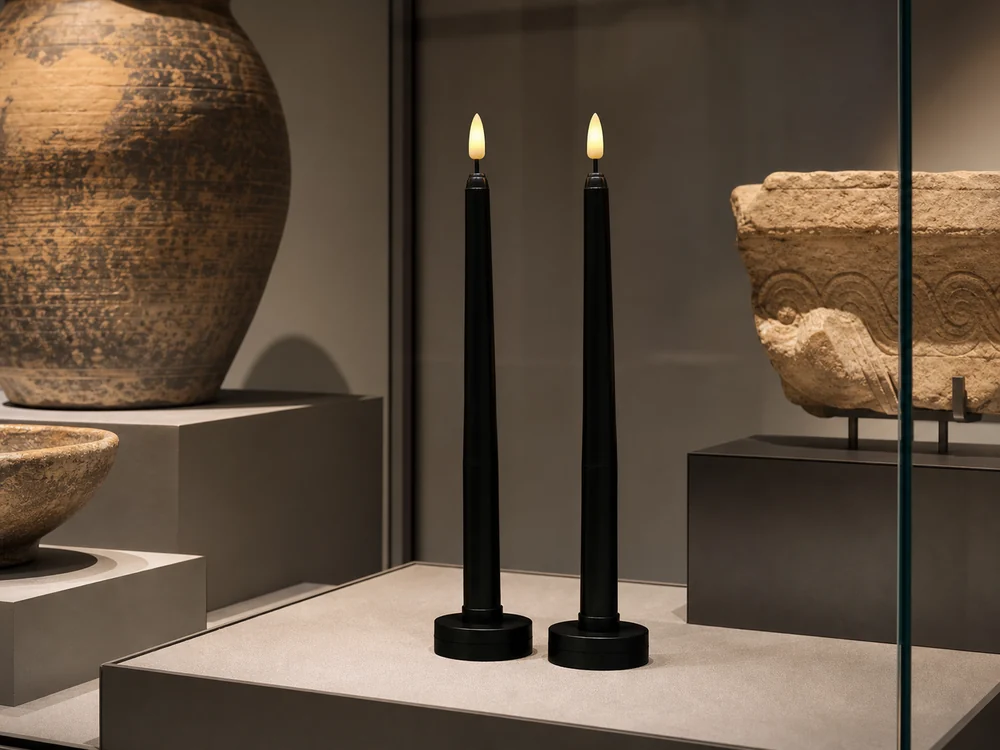
Product context for flameless candles for museums: Review the primary Zabicat product, compare this related electronic candle option, and read the relevant Zabicat guide. The listing describes a 12-piece black or white plastic taper set, about 28 cm or 11 inches high and 2.1 cm in diameter, with warm white flickering light, manual twist operation, and two AAA batteries required per candle but not included.
Flameless Candles For Museums Start With the Actual Setting
Flameless candles for museums work best when the decision begins with curatorial intent, conservation, case design, visitor reach, accessibility, light levels, mount stability, maintenance, and interpretation. Name who uses the space, when the display operates, and what other objects move through the same area. This turns a broad decorating idea into a testable plan with a defined surface, viewing distance, power routine, and responsible person.
For this setting, start with two exact black electronic tapers in heavy custom-fit holders inside a modern exhibit case, separated from artifacts. Photograph the proposed location while the surrounding room is in normal use, not after everything has been cleared for styling. Doors, bags, menus, books, tableware, cleaning tools, and seasonal pieces can change the available footprint and reveal whether the candle group is genuinely practical.
Match the Zabicat Product to the Job
The product match should be judged through the black or white 11-inch taper dimensions, 2.1 cm base, AAA requirement, and manual twist operation. Treat dimensions, quantity, material, controls, charging time, battery format, and listed runtime as separate facts. Do not assume that a remote, timer, charger, holder, battery, or outdoor rating is included unless the current product page explicitly says so.
A staged image can show proportion, but it cannot prove runtime, fit, water resistance, institutional approval, or commercial certification. For flameless candles for museums, compare the product page with the measured location and write down every unverified requirement. A requirement that remains unanswered is a reason to ask the seller or choose another model, not an invitation to guess.
Build a Stable and Honest Display
Use a clearly contemporary interpretation display where molded electronic tips remain visible and no smoke or wax effect is added. Keep the molded or opaque electronic tip visible enough that the item remains identifiable as an LED device. Do not add a wick, smoke, melted wax, or a transparent burning effect. The goal is a believable electronic candle scene that represents the product customers will receive.
For flameless candles for museums, stability matters more than density. Test the complete arrangement from seated, standing, and approach views, then lightly bump the approved surface as normal use would. If a holder rocks, a tray slides, a tall taper leans, or a low tea light disappears behind clutter, reduce the quantity or change the support before refining color and spacing.
Plan Power, Controls, and Timing
The operating plan for flameless candles for museums should include approved mount testing, matched battery installation by staff, limited run schedule, condition checks, and documented case access. Use only the battery type, charger, cable, switch, remote, or timer described for the exact model. Label accessories by set and keep them away from unrelated electronics so a similar connector or remote is not treated as interchangeable without verification.
Test the full intended session before depending on flameless candles for museums. Record start time, useful light duration, control response, and any uneven output. Listing figures are useful context, but temperature, battery age, mode, charging history, and individual electronics can change observed performance. Build a reserve or shorter schedule from your own test rather than publishing a guarantee.
Control the Most Likely Failure
The main failure to plan around is using an inaccurate burning effect, unstable mount, unapproved material, or battery device too close to original objects and paper labels. Write one remove-from-service rule that staff or household members can follow without interpretation. Cracks, loose battery doors, damaged tips, corrosion, liquid exposure, unusual heat, charging difficulty, or inconsistent output should trigger isolation and review rather than an improvised repair.
When managing flameless candles for museums, count small components before and after use. Installed, spare, depleted, and damaged cells need separate secure storage, especially where children or the public may be present. Charging must occur in a dry suitable area under the product instructions. Never hide a connected cable under fabric, behind soft furnishings, or in a crowded drawer.
Apply Safety and Policy Boundaries
The NFPA candle safety guidance provides useful open-flame context when evaluating flameless candles for museums. Electronic candles remove combustion, hot wax, smoke, and soot from the display, but they remain battery-powered devices that need stable placement, dry handling, inspection, and controlled access.
For flameless candles for museums, museum conservation, fire, electrical, casework, interpretation, and accessibility decisions must approve every component and no heritage claim is inferred. Avoid absolute claims such as fireproof, waterproof, childproof, safe anywhere, or approved for every venue. Building management, insurers, event contracts, accessibility rules, infection-control procedures, school policies, and local requirements may be stricter than a general decorating guide.
Run a Small Trial and Record Results
Pilot one complete display before expanding flameless candles for museums. Record setup time, fit, brightness, charging or battery work, cleaning time, faults, moved pieces, and user questions. A short written log provides experience-based evidence and exposes the operational cost that a product photograph cannot show.
Review the flameless candles for museums trial after several normal uses. If the candle repeatedly blocks access, gets wet, loses accessories, dims before the planned finish, or requires more labor than expected, change the location, pack size, power method, or product. A disciplined trial protects both the setting and the credibility of the final recommendation.
Decision Notes for Flameless Candles For Museums
Measure the display: Measure case volume, artifact clearance, mount cup, total height, visitor sight line, access door, battery-service route, and light level. Write the dimensions beside the product listing before ordering. This small step prevents a decorative image from overriding holder fit, access, and the true amount of space available.
Identify the likely failure: using an inaccurate burning effect, unstable mount, unapproved material, or battery device too close to original objects and paper labels Planning around the weak point creates a more reliable result than adding features that do not solve the daily problem.
Define the routine: Submit the model and materials, mock up outside the case, approve mounts and interpretation, install by staff, log runtime, and inspect condition. A repeatable routine is evidence that the product suits the setting. If the process sounds inconvenient before purchase, another power type, pack size, or candle shape may be the better choice.
A Practical Evaluation Worksheet
Create a one-page worksheet before buying flameless candles for museums. In the first column, record only facts visible on the current product page: dimensions, quantity, power source, included controls, timer choices, charging or cell requirements, body material, and light-tip design. In the second column, record facts about the destination: available width and height, holder dimensions, outlet access, moisture exposure, viewing distance, operating frequency, and the person responsible for maintenance. A product belongs on the shortlist only when both columns agree.
Then run a small scene test for flameless candles for museums instead of decorating the whole room at once. Use one holder or tray, photograph the candle while switched off and on, view it from the normal seated or standing position, and practice the full service step. That step may mean lifting the unit for charging, opening a battery door, cleaning a recessed top, or collecting several pieces after use. The test reveals practical friction that specifications alone cannot show, while keeping the recommendation grounded in observable evidence rather than assumptions.
Care, Storage, and Product Review
Handle with clean gloves if the museum requires them, protect tips and finishes, and keep batteries and electronics isolated from collection storage. Protect the light tips from pressure, keep accessories with the set, and stop using any piece with visible damage. Clean condition matters because dust and residue alter both close-up appearance and light spread.
For flameless candles for museums, review the product page again when reordering because pack contents, controls, and specifications can change. This article was checked against current Zabicat listing details on July 15, 2026. The styling recommendations are editorial guidance, not a laboratory performance test or a substitute for the manufacturer’s instructions.
FAQ
Can flameless candles be placed beside artifacts?
Only after curatorial and conservation approval of clearance, materials, mounting, batteries, light, and access.
Should the electronic tip be hidden?
No. Interpretation and imagery should not misrepresent an electronic product as a burning wax candle.
Who should change exhibit batteries?
Authorized museum staff should follow the approved access, handling, documentation, and disposal procedure.
Bottom line: Choose flameless candles for museums only after the size, power routine, electronic flame shape, control method, and maintenance plan all fit the real setting. A clear product match creates better decor and fewer surprises than a purchase based only on a distant glow photo.