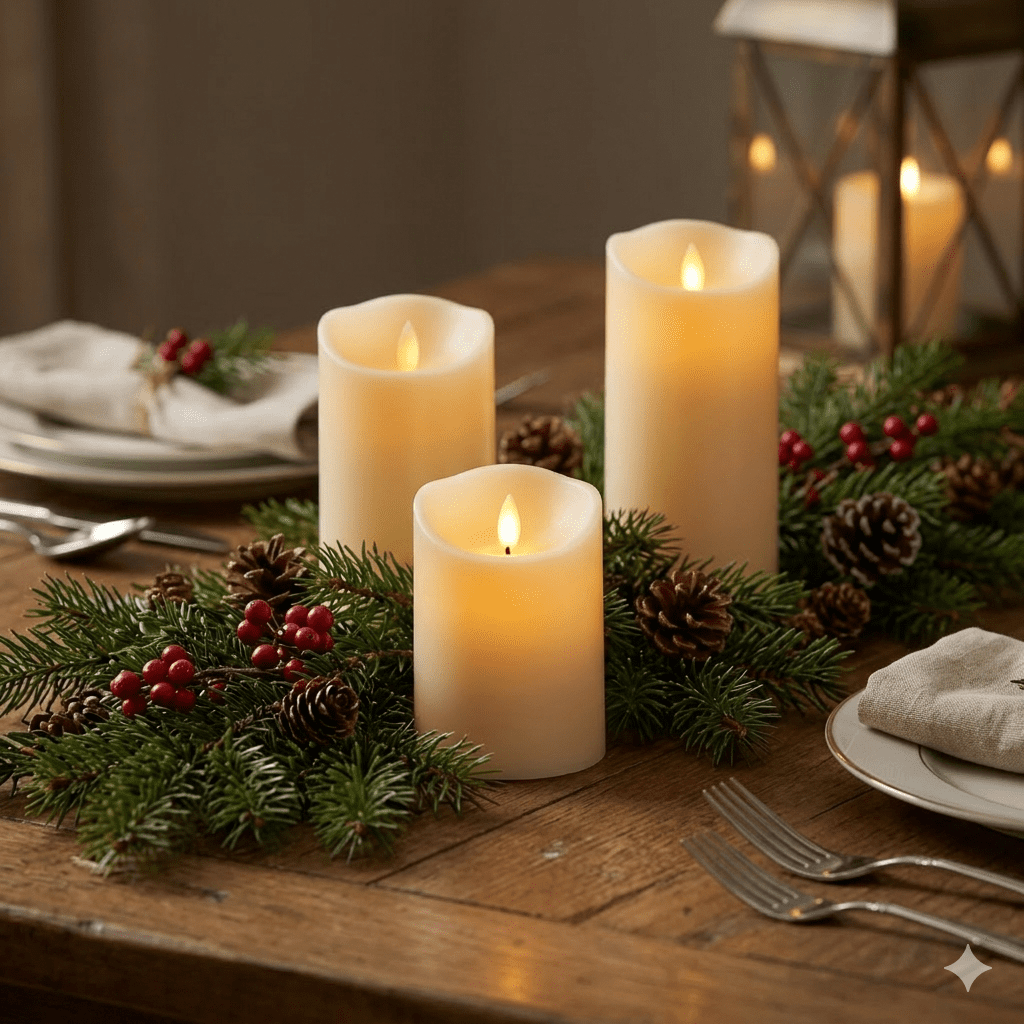
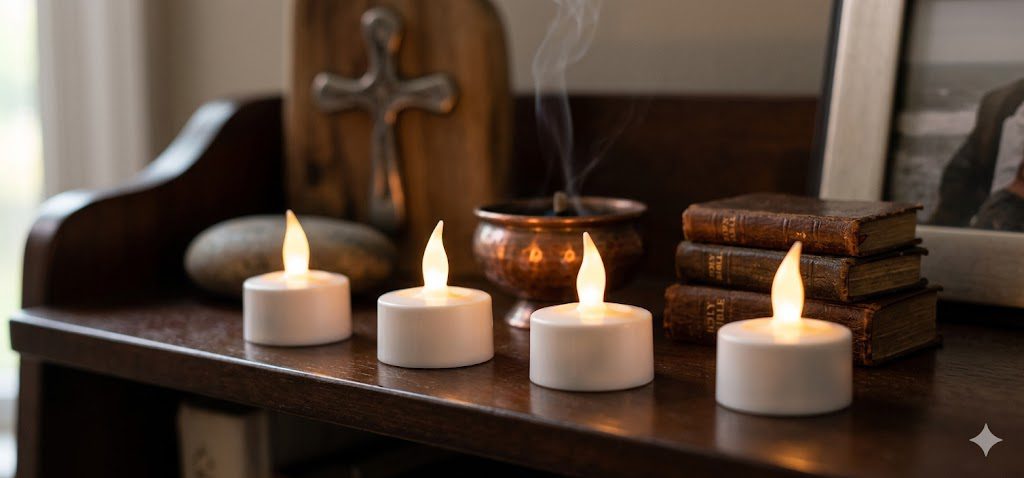
Flameless candles for wedding centerpieces are useful when you want the romance of candlelight without asking the venue, planner, or family members to manage dozens of open flames. They can sit near flowers, linens, paper menus, table numbers, greenery, and guest favors with far less stress than real candles. They also stay consistent from the first guest arrival to the last dance.
The most polished wedding tables usually use more than one candle shape. Tall LED taper candles add height. Tea lights create repeated glow near the table surface. Moving wick candles can make sweetheart tables, entry tables, and cake tables feel more realistic in photos. The key is to choose candle styles that match the venue, the table size, and the level of formality.
Zabicat carries LED taper candles and LED tea lights that fit this kind of layered wedding setup.
Why Wedding Planners Use Flameless Candles
Real candles are beautiful, but wedding venues often have rules about open flame. Some venues allow candles only inside glass hurricanes. Some allow votives but not tapers. Some ban open flame completely because of insurance, historic buildings, outdoor wind, or fire-code concerns.
Flameless candles give couples more flexibility. They do not drip wax onto rented linens, they do not blow out during outdoor ceremonies, and they do not need to be relit by staff. If the reception includes children, crowded tables, long sleeves, or hanging greenery, flameless options also reduce the number of things guests can accidentally knock into a flame.
From a design perspective, the benefit is consistency. A real taper candle changes over the night. It gets shorter, leans, drips, or burns unevenly. A flameless taper keeps the same height in every photo. That matters for weddings because the tables are styled before guests arrive, but photography often happens hours later.
Start with the Table Shape
The right flameless candles for wedding centerpieces depend on table shape. Round tables usually look best with a central floral arrangement, a few low tea lights, and either two or three taller candle points. Long banquet tables can handle a repeated rhythm: taper, greenery, tea lights, floral cluster, then repeat.
For round guest tables, avoid placing too many tall candles in the center if guests need to see across the table. A pair of taper candles in slim holders can frame the flowers without blocking conversation. Add LED tea lights around the base for warmth.
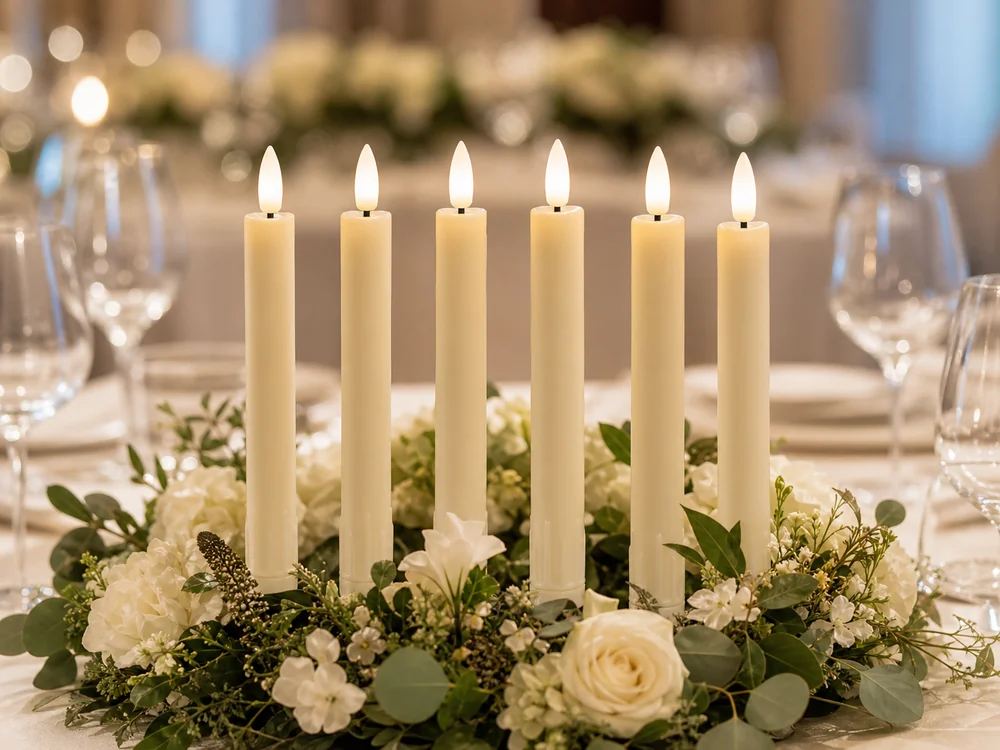
For rectangular tables, flameless taper candles are especially useful because they create a visual line. A 12-piece taper set can be spread across several tables, a head table, or a ceremony aisle. Black and white candle sets can also help if the wedding palette uses contrast instead of all ivory.
Choose the Right Candle Height
Height creates drama, but too much height can get in the way. Short tea lights and votives give glow. Taper candles give structure. Pillar or moving wick candles give visual weight.
For low floral arrangements, taller LED tapers make the table feel finished. For tall floral arrangements, keep the candles lower so the table does not look crowded. For sweetheart tables, you can use taller candles because the table is usually photographed from the front and does not need the same sightline rules as guest tables.
Zabicat’s Flameless Black And White Candle Pack of 12 can work for modern wedding palettes, black-tie tables, Halloween weddings, or any reception where all-white candles feel too predictable.
Match Light Color to the Venue
Warm white light is usually the safest choice for wedding centerpieces. It flatters flowers, skin tones, wood tables, brass holders, and ivory linens. A yellow light can feel romantic if it is soft. A light that is too orange may look artificial in photos, while cool white can feel more like event lighting than candlelight.
If possible, test one candle in the venue or in a similar room before buying the full quantity. Look at it under daylight, evening lighting, and the venue’s overhead lights. A candle that looks warm at home can look dim in a large ballroom. A candle that looks bright in a product photo can feel harsh on a table.
For weddings, the best glow is usually subtle. Candlelight should support the flowers, glassware, and table setting. It should not overpower them.
Use Tea Lights Where Real Candles Would Be Annoying
LED tea lights are practical around place cards, dessert tables, bars, guest book tables, and bathrooms. These small areas often need atmosphere, but they are not watched as closely as guest tables. A real tea light in a busy bar area can be bumped or forgotten. A battery tea light with a timer is easier to place and leave alone.
Tea lights also help fill wide tables without increasing the flower budget. A few small lights around each centerpiece can make a simple arrangement feel more expensive. If the reception is in a dark room, the repeated low glow matters more than large centerpieces.
Use tea lights in glass votives, ribbed holders, lanterns, or low ceramic cups to make them feel intentional. The holder hides the plastic edge and diffuses the light.
When to Use Taper Candles
LED taper candles work best when the wedding design needs height and elegance. They suit dining tables, ceremony aisles, mantel displays, welcome tables, and cake tables. They also photograph well when they appear behind flowers or glassware.
Taper candles need holders. Before ordering a large set, check the candle diameter and the holder opening. If the candle is slightly loose, a small amount of removable candle adhesive can help stabilize it. Avoid forcing a candle into a holder that is too narrow because plastic taper candles can crack or lean.
For formal tables, keep taper colors consistent. Mixing black, white, beige, and ivory can look accidental unless the palette is intentionally layered. A single candle color repeated across the reception usually looks more expensive.
Remote Controls and Timers Save Setup Time
Setup time matters on a wedding day. A remote or timer feature can save a coordinator from turning on every candle by hand. This is especially useful for large receptions, window displays, ceremony aisles, or candles placed inside lanterns.
If the candles have timers, decide when they should start. For a reception that begins at 5 p.m., turning them on during setup at noon may waste battery life. If the candles use remote controls, test the remote before the event and keep extra batteries with the emergency kit.
The best plan is simple: assign one person to candle setup, one person to test the glow, and one person to pack them after the event. Flameless candles are reusable, but only if they are collected carefully.
How Many Flameless Candles Do You Need?
A small wedding may need only a few 12-piece sets. A large reception can require many more. Start by counting tables and table zones:
- Guest tables
- Head table or sweetheart table
- Ceremony aisle
- Welcome table
- Bar
- Cake table
- Guest book table
- Bathroom or lounge areas
- Window ledges or mantels
For each guest table, a simple formula is two taper candles plus three to five tea lights. For long tables, repeat a small cluster every two to three feet. For accent tables, one small cluster is usually enough.
Always order a few extras. Candles can be damaged, batteries can fail, and last-minute table changes happen.
Styling Mistakes to Avoid
Do not use tiny tea lights alone on a large ballroom table. They can disappear visually. Do not use tall tapers without checking sightlines. Guests should not have to lean around candles to talk. Do not mix too many candle body colors unless the design calls for it.
Also avoid placing LED candles directly beside very shiny plastic decor. The combination can make the whole table feel artificial. Glass, metal, ceramic, greenery, linen, and florals help flameless candles look more natural.
Finally, do not forget daylight appearance. Guests will see the tables before the room gets dark. Choose candle bodies and holders that look good even before the lights are turned on.
The safest design decision is to build one sample table before ordering the full quantity. Place the flowers, linens, table number, glassware, and candles together, then take a phone photo from guest height. If the candles vanish, add height with tapers. If the table looks crowded, reduce the number of holders. Flameless candles for wedding centerpieces should support the room, not compete with every other detail on the table.
FAQ
Are flameless candles acceptable for formal wedding centerpieces?
Yes, if they are styled with good holders, warm light, and the right scale. The most formal look usually comes from combining taper candles with glass, metal, florals, and low tea lights.
Do flameless candles photograph well?
They can photograph well when the glow is warm and the candle is placed in a holder or mixed with real materials such as flowers, linen, glass, and greenery. Avoid harsh cool-white LEDs for reception tables.
How many flameless candles should I use per wedding table?
For a round guest table, two tapers and three to five tea lights is a practical starting point. Long tables need repeated clusters instead of one central group.
Are LED tea lights or taper candles better for weddings?
They serve different roles. LED tea lights create low glow and fill space. LED taper candles add height and formality. Most wedding centerpieces look better with both.
Final Takeaway
Flameless candles for wedding centerpieces are best when they are treated like a design material, not a shortcut. Choose warm light, repeat the same candle color, use holders, and match the candle height to the table. For a flexible starting point, compare Zabicat’s LED taper candles and LED tea lights before building the full table plan.