Flameless candles for home staging deserve a decision based on the actual product, the way the space operates, and the maintenance someone will perform. This guide uses Zabicat’s current listing details as the factual product context, then separates those facts from practical editorial advice about fit, placement, control, and care.
The aim is not to make an electronic candle sound like a burning candle. For flameless candles for home staging, shoppers should judge a stable body, a flame-shaped LED component, the correct power routine, and a scene where the product can be used honestly. Measurements and product instructions should always take priority over a staged photograph.
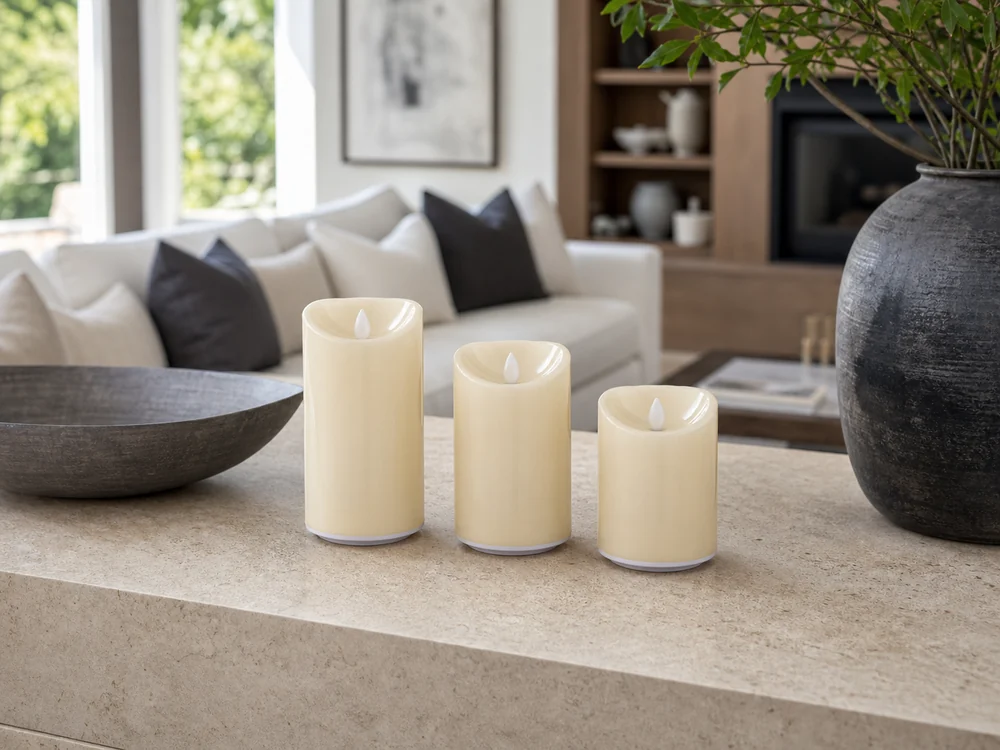
Product context: Review the primary Zabicat product, compare this related electronic candle option, and read the relevant Zabicat guide. The primary listing specifies beige plastic pillars with a 3-inch diameter in 4, 5, and 6-inch heights, yellow light, rechargeable batteries, USB charging, a remote, a listed 4 to 6-hour charge, and more than 10 hours of use.
Flameless Candles for Home Staging Need a Clear Role
Flameless candles for home staging should support the room’s purpose rather than announce themselves as a decorating trick. Use them to add one warm layer on a living-room console, mantel, dining sideboard, or sheltered bedroom shelf. They should not compete with windows, architecture, storage, or the clear circulation paths buyers need to understand the home.
The referenced Zabicat set includes three ivory pillars at different listed heights. That variation can create an orderly group without buying unrelated shapes. Place the group on a broad stable surface and leave negative space around it. A restrained arrangement reads as part of the property presentation, while candles scattered through every room can feel repetitive and distract from square footage.
Style for Daylight Before Evening Glow
Most listing photos and many showings happen in daylight, when a yellow LED may be less visible. Evaluate the candles switched off and on with blinds in their normal position. The scalloped recessed tops, ivory color, and white base rings must look tidy even when the glow contributes little. Do not darken the room simply to make a decorative product brighter.
Use contrast from wood, stone, charcoal, green plants, or a muted wall instead of surrounding the candles with more beige accessories. Check whether glossy tops reflect a window or camera flash. Moving the group a few inches may improve the photograph more than adding another candle. The room should remain the subject; the product is a controlled supporting detail.
Choose Surfaces That Show Scale
A 3-inch diameter pillar needs enough surface depth to look stable. Set the group back from the edge and avoid narrow shelves where the tallest 6-inch candle appears top-heavy. A tray can organize the set only when it remains level, dry, and large enough that no body touches another. Avoid loose stones, fabric nests, and decorative filler.
Keep the display away from listing brochures, business cards, curtains, plant leaves, and furniture that buyers may open or move. LED products do not have open flame, but a knocked device still creates clutter and possible damage. Walk the showing route with doors and drawers operating normally, then view the setup from the entry and from likely photo angles.
Use One Visual Language Across the Listing
Repeat color or material, not necessarily the same candle group, across rooms. The ivory pillars can echo a light sofa or ceramic vase while darker accents keep the palette grounded. Avoid mixing multiple flame-tip shapes in one image. Consistency helps the staging feel deliberate and prevents close-up photographs from exposing a collection of unrelated electronic products.
Do not add faux wax, soot, fragrance, or melted edges to make the candles appear real. The primary product already has a recessed scalloped top and small electronic tip. Present those details accurately. Buyers viewing the home should not mistake decor for an included fixture or assume the product emits scent, heat, or illumination beyond its decorative LED output.
Build Charging Into the Showing Calendar
The product listing gives a 4 to 6-hour charge and more than 10 hours of use. Treat those as current listing statements, not a guarantee for every battery or schedule. Charge the set in a dry ventilated location before photography or a showing block, using the correct cable. Do not leave cables visible on the staged console.
Assign the listing agent, stager, or homeowner to one simple routine: charge, place, test, switch, collect, and store. Record which remote belongs to the set. For an occupied home, choose an operating window that does not interrupt daily use. For a vacant property, do not leave rechargeable devices operating indefinitely between visits without an approved inspection plan.
Keep Claims and Property Rules Accurate
The NFPA candle safety guidance provides context for concerns around burning candles during an open house. Rechargeable LED pillars avoid a burning wick, hot wax, smoke, and soot, but the agent, owner, building, and insurer may still set rules for decorative battery devices and unattended operation.
A staged image should not imply that the candle is waterproof, permanently installed, part of the sale, or approved for every location. Keep electronics out of wet bathrooms and outdoor spaces unless the listing explicitly supports that use. E-E-A-T depends on distinguishing verified product features from styling choices and from property-specific policies the seller must confirm.
Audit the Room Through Photos and Showings
Take test photographs from the exact listing angles, then inspect the frame for glare, crooked bodies, exposed base rings, and crowded accessories. During the first showing, note whether visitors move the candles or whether an agent must reset them. A useful staging element should remain stable and require little explanation while the room is being toured.
After each showing block, collect feedback and inspect charge, dust, placement, and condition. Remove the group if it narrows a surface buyers need to examine or becomes another maintenance task. This feedback loop keeps flameless candles for home staging focused on clear room presentation instead of following a decorative formula regardless of the property.
Decision Notes for Flameless Candles For Home Staging
Measure the display: Measure console and mantel depth, edge setback, camera sight lines, window reflections, walking clearance, charging-station space, and the distance from curtains, plants, and open-house materials. Write the dimensions beside the product listing before ordering. This small step prevents a decorative image from overriding holder fit, access, and the true amount of space available.
Identify the likely failure: The common staging error is building a dark, candle-heavy photograph that looks artificial in daylight, adds visual clutter, hides room scale, or leaves agents managing uncharged devices between showings. Planning around the weak point creates a more reliable result than adding features that do not solve the daily problem.
Define the routine: Choose one focal zone per room, charge in a dry utility area, test in daylight and evening light, photograph the listing view, switch off after showings, and reset from a simple checklist. A repeatable routine is evidence that the product suits the setting. If the process sounds inconvenient before purchase, another power type, pack size, or candle shape may be the better choice.
A Practical Evaluation Worksheet
Create a one-page worksheet before buying flameless candles for home staging. In the first column, record only facts visible on the current product page: dimensions, quantity, power source, included controls, timer choices, charging or cell requirements, body material, and light-tip design. In the second column, record facts about the destination: available width and height, holder dimensions, outlet access, moisture exposure, viewing distance, operating frequency, and the person responsible for maintenance. A product belongs on the shortlist only when both columns agree.
Then run a small scene test for flameless candles for home staging instead of decorating the whole room at once. Use one holder or tray, photograph the candle while switched off and on, view it from the normal seated or standing position, and practice the full service step. That step may mean lifting the unit for charging, opening a battery door, cleaning a recessed top, or collecting several pieces after use. The test reveals practical friction that specifications alone cannot show, while keeping the recommendation grounded in observable evidence rather than assumptions.
Care, Storage, and Product Review
Dust smooth bodies with a dry microfiber cloth, keep USB ports dry, protect recessed tips during transport, and isolate any cracked, contaminated, or unusually warm unit. Protect the light tips from pressure, keep accessories with the set, and stop using any piece with visible damage. Clean condition matters because dust and residue alter both close-up appearance and light spread.
For flameless candles for home staging, review the product page again when reordering because pack contents, controls, and specifications can change. This article was checked against current Zabicat listing details on July 14, 2026. The styling recommendations are editorial guidance, not a laboratory performance test or a substitute for the manufacturer’s instructions.
FAQ
How many flameless candles should a staged room use?
Begin with one restrained group of three on a broad surface, then judge the real room and listing photographs before adding more.
Should staged candles be on for daytime photos?
Test both states. Daylight, reflections, room exposure, and the candle’s unlit appearance determine which photograph is clearer.
Can a stager leave rechargeable candles on in a vacant home?
Only under the product instructions and the property owner’s, agent’s, building’s, and insurer’s approved inspection policy.
Bottom line: Choose flameless candles for home staging only after the size, power routine, electronic flame shape, control method, and maintenance plan all fit the real setting. A clear product match creates better decor and fewer surprises than a purchase based only on a distant glow photo.