Battery operated taper candles for wall sconces deserve a decision based on the actual product, the way the space operates, and the maintenance someone will perform. This guide uses Zabicat’s current listing details as the factual product context, then separates those facts from practical editorial advice about fit, placement, control, and care.
The aim is not to make an electronic candle sound like a burning candle. For battery operated taper candles for wall sconces, shoppers should judge a stable body, a flame-shaped LED component, the correct power routine, and a scene where the product can be used honestly. Measurements and product instructions should always take priority over a staged photograph.
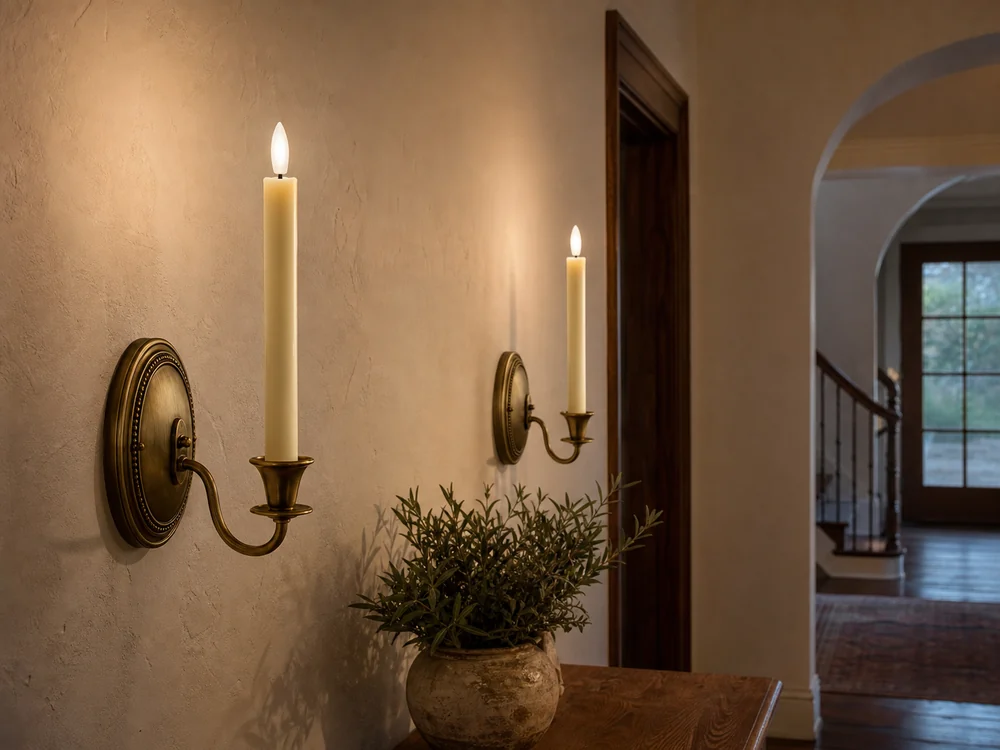
Product context: Review the primary Zabicat product, compare this related electronic candle option, and read the relevant Zabicat guide. The primary listing specifies six smooth beige plastic tapers measuring about 25.5 cm or 10 inches high with a 2.1 cm base diameter, warm white light, two AAA batteries required per candle but not included, and a remote control.
Battery Operated Taper Candles for Wall Sconces Start With Fit
Battery operated taper candles for wall sconces must fit the physical cup before color or flicker matters. A rigid plastic candle cannot compress like wax, and decorative sconces vary widely in opening, taper, and depth. Remove the holder cup when the design allows, measure its narrowest usable diameter, and compare that figure with the candle base rather than the widest rim.
The referenced Zabicat taper has a listed 2.1 cm base and a short fluted lower section. Test the actual unit because paint, seams, inserts, and antique hardware can reduce usable space. The base should enter without scraping and remain vertical without improvised paper, fabric, hot glue, or pressure that could damage the battery housing.
Check Cup Depth and Weight Distribution
Cup depth controls how much of the base is supported. A shallow cup can leave the rigid taper sitting high, while a narrow lower cup may stop the candle before it reaches the bottom. Insert the unpowered candle gently, then view the sconce from the front and side. The body should not lean toward the room or touch the backplate.
Wall-mounted objects deserve a stricter stability test than tabletop holders because a falling taper can strike furniture or people below. Use only a purpose-made, noncombustible holder adapter compatible with both items when extra fit is needed. Do not carve the plastic body. Confirm that the approved adapter does not block battery access or create pressure around a seam.
Measure the Complete Installed Height
A 10-inch body plus an electronic tip creates a prominent vertical line. Measure from the sconce cup to the tip, then check nearby picture frames, shelves, ceiling slopes, curtains, and door swings. A candle that looks balanced in a product photo can appear oversized on a small hallway fixture or sit too close to another object once mounted.
Review the arrangement from the normal approach path and from seated eye level where relevant. Matching height on a pair of sconces matters more than tiny differences visible only from a ladder. If one cup sits lower or tilts, correct the fixture according to its installation instructions rather than adjusting the candle with loose packing material.
Keep the Electronic Tip Visually Honest
The primary product has a smooth beige body, a short dark stem, and an opaque leaf-shaped LED component. That molded tip should remain recognizable as electronics, especially when a wall sconce brings it near eye level. Use room lighting that supports a warm accent without attempting to disguise the tip with paint, faux soot, fibers, or melted wax.
Turn the set on after the fit check and compare both units from the same distance. Uneven brightness may point to mixed battery age, poor contact, or a damaged candle. Do not bend the stem to imitate a natural flame. Consistent body alignment and a clean holder create a more convincing display than altering a component the manufacturer designed to move or illuminate.
Plan Remote Use and Battery Changes
The listing says each taper requires two AAA batteries and includes a remote. Install the specified type and orientation, close the compartment fully, and test the remote from the place where it will normally be used. Thick walls, distance, furniture, and angle can affect response, so verify the real room rather than assuming every candle will switch together.
Choose a removal method before mounting a sconce high on the wall. An adult should be able to reach the candle safely with an appropriate step platform or take the fixture down according to its instructions. Record battery installation dates and replace matched cells together when performance declines. Never leave a ladder-dependent maintenance task undocumented in a shared space.
Apply Open-Flame Context Without Overclaiming
The NFPA candle safety guidance explains the supervision, stable-holder, and combustible-clearance concerns associated with burning candles. Electronic tapers remove a burning wick, hot wax, soot, and smoke. They still require stable mounting, intact batteries, dry indoor placement, and compliance with household, landlord, or venue rules.
Describe these as battery-operated plastic LED tapers, not fireproof candles or substitutes for required lighting. They are decorative accents and do not illuminate stairs, corridors, or exits to a code-compliant level. Honest wording helps a buyer evaluate holder fit, product instructions, wall hardware, and local policy instead of relying on a broad safety promise.
Create a Repeatable Sconce Inspection
Photograph each approved candle-and-sconce combination and note cup diameter, adapter, installed height, battery type, remote, and room. Before seasonal use, check the wall fasteners, holder screw, cup, candle body, battery door, and tip. Remove any unit that leans, cracks, corrodes, heats unusually, or responds inconsistently rather than moving it to a less visible wall.
At storage time, remove the taper by the body and follow the product directions for batteries during long periods of nonuse. Keep candles away from heavy brass hardware that can crush the tips. This small compatibility record makes battery operated taper candles for wall sconces easier to reinstall accurately and prevents repeated trial-and-error on finished walls.
Decision Notes for Battery Operated Taper Candles For Wall Sconces
Measure the display: Measure the sconce cup at its narrowest point, usable cup depth, taper base, full installed height, wall clearance, shelf or frame clearance, and the reach needed for removal. Write the dimensions beside the product listing before ordering. This small step prevents a decorative image from overriding holder fit, access, and the true amount of space available.
Identify the likely failure: The usual failure is assuming a standard candle cup will accept a rigid 2.1 cm electronic base, then forcing the taper or leaving a tall top-heavy candle leaning above eye level. Planning around the weak point creates a more reliable result than adding features that do not solve the daily problem.
Define the routine: Test one unpowered taper in every sconce, document approved holders, install matched batteries, verify remote response, check stability from several angles, and inspect each unit before use. A repeatable routine is evidence that the product suits the setting. If the process sounds inconvenient before purchase, another power type, pack size, or candle shape may be the better choice.
A Practical Evaluation Worksheet
Create a one-page worksheet before buying battery operated taper candles for wall sconces. In the first column, record only facts visible on the current product page: dimensions, quantity, power source, included controls, timer choices, charging or cell requirements, body material, and light-tip design. In the second column, record facts about the destination: available width and height, holder dimensions, outlet access, moisture exposure, viewing distance, operating frequency, and the person responsible for maintenance. A product belongs on the shortlist only when both columns agree.
Then run a small scene test for battery operated taper candles for wall sconces instead of decorating the whole room at once. Use one holder or tray, photograph the candle while switched off and on, view it from the normal seated or standing position, and practice the full service step. That step may mean lifting the unit for charging, opening a battery door, cleaning a recessed top, or collecting several pieces after use. The test reveals practical friction that specifications alone cannot show, while keeping the recommendation grounded in observable evidence rather than assumptions.
Care, Storage, and Product Review
Lift each taper by its body, wipe it with a dry lint-free cloth, protect the electronic tip, keep battery compartments dry, and store candles horizontally in divided slots. Protect the light tips from pressure, keep accessories with the set, and stop using any piece with visible damage. Clean condition matters because dust and residue alter both close-up appearance and light spread.
For battery operated taper candles for wall sconces, review the product page again when reordering because pack contents, controls, and specifications can change. This article was checked against current Zabicat listing details on July 14, 2026. The styling recommendations are editorial guidance, not a laboratory performance test or a substitute for the manufacturer’s instructions.
FAQ
Do battery tapers fit every wall sconce?
No. Measure the rigid base, cup opening, usable depth, adapter, installed height, and wall clearance for each holder.
Can I shave a plastic taper to make it fit?
Do not cut or shave an electronic candle body. Use a compatible purpose-made holder adapter or select another size.
Can wall-sconce candles replace hallway lighting?
No. Candle-style LEDs are decorative and must not replace required general, stair, exit, or emergency illumination.
Bottom line: Choose battery operated taper candles for wall sconces only after the size, power routine, electronic flame shape, control method, and maintenance plan all fit the real setting. A clear product match creates better decor and fewer surprises than a purchase based only on a distant glow photo.