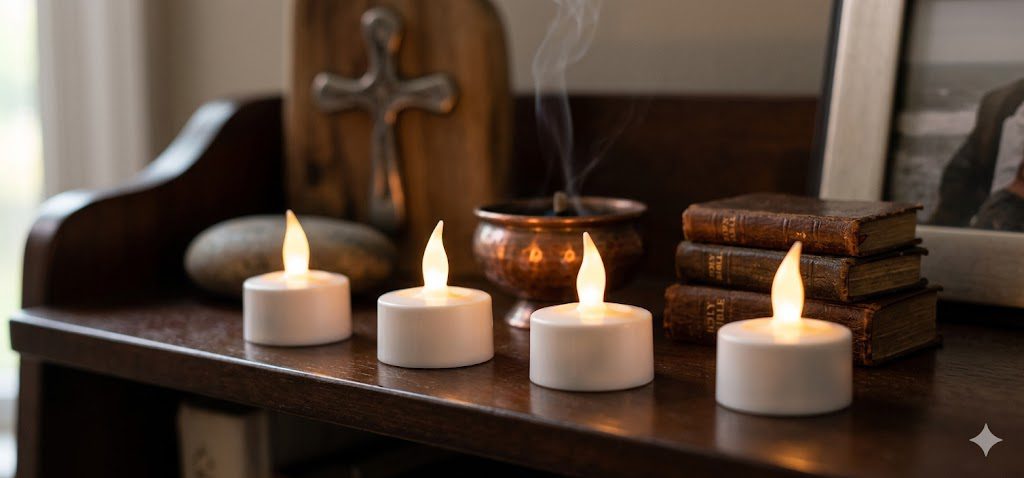
Rechargeable tea lights for hotels deserve a decision based on the actual product, the way the space operates, and the maintenance someone will perform. This guide uses Zabicat’s current listing details as the factual product context, then separates those facts from practical editorial advice about fit, placement, control, and care.
The aim is not to make an electronic candle sound like a burning candle. For rechargeable tea lights for hotels, shoppers should judge a stable body, a flame-shaped LED component, the correct power routine, and a scene where the product can be used honestly. Measurements and product instructions should always take priority over a staged photograph.
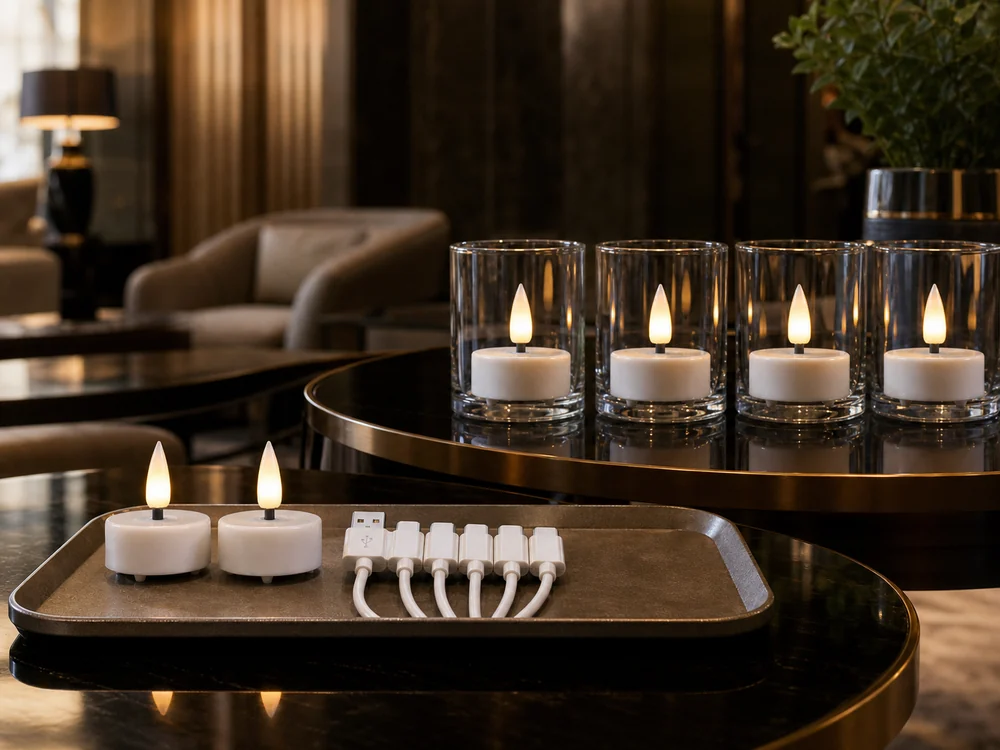
Product context: Review the primary Zabicat product, compare this related electronic candle option, and read the relevant Zabicat guide. The primary listing specifies six white plastic warm-white LED tea lights with rechargeable batteries and a USB multi-lead charging cable; it lists a usual 6 to 8-hour charge and more than 10 hours of use.
Rechargeable Tea Lights for Hotels Need Zone Ownership
Rechargeable tea lights for hotels may serve the lobby, lounge, bar, restaurant, event rooms, spa reception, or seasonal displays. Each zone has different hours, holders, staff, and guest access. Assign quantities and ownership by department before buying. A shared untracked pool quickly becomes difficult to charge, clean, count, and retrieve.
The referenced Zabicat set contains six low white rechargeable tea lights and a multi-lead USB cable. Six units can support a sample zone or small lounge arrangement. A hotel-wide plan needs the installed count, operating schedule, reserve, charging capacity, replacement allowance, and handoff procedure written beside the product specifications.
Test Every Holder and Table Type
Glass votives can diffuse the warm LED while keeping the white body stable, but holder dimensions vary. Measure internal diameter and depth, then confirm staff can lift the tea light out without tipping or pulling the electronic tip. Deep opaque holders may hide too much output, and narrow cups can trap the unit.
Test on polished lobby tables, restaurant linens, bar ledges, and event furniture separately. Check reflections, glare, base stability, and clearance from menus, flowers, and guest belongings. Use the same candle model within one visible zone. Different tip shapes or color temperatures make a premium room look inconsistent even when every unit functions.
Design a Back-of-House Charging Rotation
The listing states a usual 6 to 8-hour charge and more than 10 hours of use. Verify current instructions and observed performance before promising a service window. Create charged, in service, recharge, and fault trays in a dry ventilated area. Charging should not occur in guest rooms, on linen shelves, or inside closed transport cases.
Protect the USB multi-lead cable from bending, liquid, and pressure. Label it for the exact set and inspect every connector before use. Schedule charging around actual department hours so breakfast, evening lounge, and late events do not compete for the same ready units. Operational timing is more important than the package count alone.
Build Housekeeping and Banquet Handoffs
Remove tea lights before spraying or wiping a table. Housekeeping or banquet staff should place used electronics on a counted collection tray, inspect the holder separately, and return both to their assigned destination. A candle should never be wrapped in linen, left inside a centerpiece, or placed in a dish bin.
Event rooms need a signed count because lights move between guest tables, welcome areas, bars, cake tables, and corridors. Record the starting quantity by zone and collect before rental decor leaves. A two-minute handoff prevents the next department from discovering missing candles only when setup is already underway.
Set Guest-Access and Fault Rules
Decide whether guests may touch, move, or switch the candle. In most service displays, controls should remain with staff and the unit should sit within a stable holder. Remove a candle that becomes unusually hot, cracked, loose at the connector, dim, or unreliable. Do not move it to a less visible table to complete the count.
Guest rooms require separate policy review because devices may be moved, packed accidentally, exposed to bathroom moisture, or left operating after checkout. Do not extend a lobby approval to bedrooms without facilities, housekeeping, brand, and risk review. A hotel should know exactly where every rechargeable device is permitted.
Document Open-Flame and Electrical Context
The NFPA candle safety guidance explains concerns associated with burning candles in occupied spaces. Rechargeable LEDs remove combustion, hot wax, smoke, and soot, but hotel policy still controls batteries, charging equipment, moisture, overnight operation, egress, and guest-facing electrical products.
Describe the product as a rechargeable plastic LED tea light. Do not claim waterproofing, commercial certification, guaranteed runtime, or universal hotel suitability unless the documentation supports it. Hotels should compare a consumer six-piece set with purpose-built hospitality systems when daily cycles, bulk charging, warranties, and service support are critical.
Audit Cost, Loss, and Replacement
Track purchase quantity, charge cycles, staff handling time, cable replacements, damaged units, and losses by zone. Compare that real record with disposable battery or other table-lighting options. Do not publish a fixed savings claim without local energy, labor, replacement, and operating data. A small pilot provides better evidence than a generic payback promise.
Review the inventory monthly and store clean units in numbered protected slots. Keep accessories, instructions, and fault notes with the set. When a zone consistently loses or damages candles, change the holder, placement, handoff, or product type. This audit makes rechargeable tea lights for hotels a managed lighting asset rather than an unexplained consumable.
Decision Notes for Rechargeable Tea Lights For Hotels
Measure the display: Measure every votive holder, guest-table footprint, service-tray slot, charging area, outlet and cable reach, plus the count required for lobby, lounge, bar, restaurant, event, and reserve zones. Write the dimensions beside the product listing before ordering. This small step prevents a decorative image from overriding holder fit, access, and the true amount of space available.
Identify the likely failure: The operational failure is treating all hotel areas as one pool, so charged units, used units, dirty holders, event stock, and missing accessories become mixed between departments. Planning around the weak point creates a more reliable result than adding features that do not solve the daily problem.
Define the routine: Assign inventory by zone, charge in a controlled back-of-house station, test each unit, issue lights on counted trays, collect before cleaning, and record ready, recharge, fault, and missing status. A repeatable routine is evidence that the product suits the setting. If the process sounds inconvenient before purchase, another power type, pack size, or candle shape may be the better choice.
A Practical Evaluation Worksheet
Create a one-page worksheet before buying rechargeable tea lights for hotels. In the first column, record only facts visible on the current product page: dimensions, quantity, power source, included controls, timer choices, charging or cell requirements, body material, and light-tip design. In the second column, record facts about the destination: available width and height, holder dimensions, outlet access, moisture exposure, viewing distance, operating frequency, and the person responsible for maintenance. A product belongs on the shortlist only when both columns agree.
Then run a small scene test for rechargeable tea lights for hotels instead of decorating the whole room at once. Use one holder or tray, photograph the candle while switched off and on, view it from the normal seated or standing position, and practice the full service step. That step may mean lifting the unit for charging, opening a battery door, cleaning a recessed top, or collecting several pieces after use. The test reveals practical friction that specifications alone cannot show, while keeping the recommendation grounded in observable evidence rather than assumptions.
Care, Storage, and Product Review
Wipe white bodies and electronic tips with an approved dry method, keep contacts and USB connectors free of moisture and residue, and protect every unit in a numbered tray during transport and storage. Protect the light tips from pressure, keep accessories with the set, and stop using any piece with visible damage. Clean condition matters because dust and residue alter both close-up appearance and light spread.
For rechargeable tea lights for hotels, review the product page again when reordering because pack contents, controls, and specifications can change. This article was checked against current Zabicat listing details on July 14, 2026. The styling recommendations are editorial guidance, not a laboratory performance test or a substitute for the manufacturer’s instructions.
FAQ
How many rechargeable tea lights does a hotel need?
Count every approved zone and service period, then add a reserve for charging, cleaning, faults, events, and loss.
Can hotel staff charge tea lights inside transport cases?
Use a dry ventilated charging area and follow the product instructions; do not charge inside closed foam or linen storage.
Should hotels place rechargeable tea lights in guest rooms?
Only after separate facilities, housekeeping, brand, risk, cleaning, charging, and guest-access review.
Bottom line: Choose rechargeable tea lights for hotels only after the size, power routine, electronic flame shape, control method, and maintenance plan all fit the real setting. A clear product match creates better decor and fewer surprises than a purchase based only on a distant glow photo.